Business
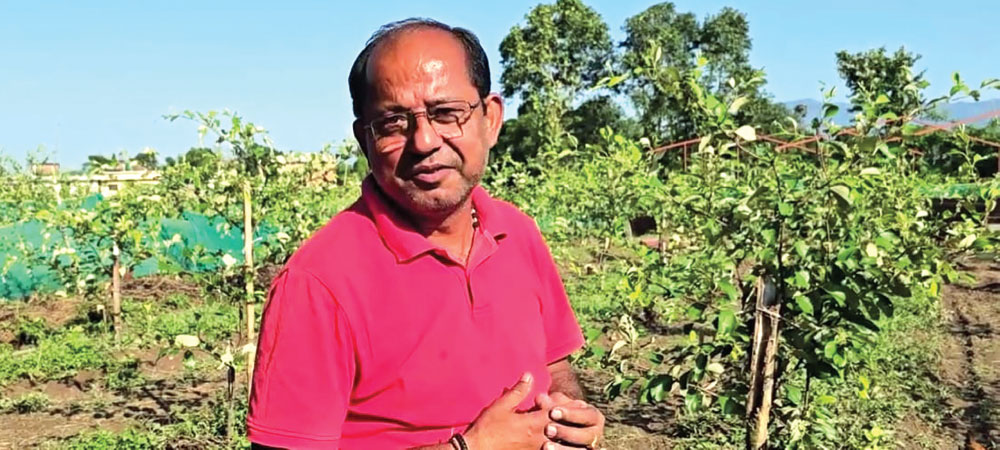
A returnee entrepreneur is developing commercial jujube cultivation alongside poultry farming in Pachurkha, about five kilometres west of Ghorahi Bazaar in Dang. The Rising Nepal reported on Wednesday, October 14 that Sudhir Kumar Regmi registered Baddaj Farm after spending five years in the United Kingdom. He has expanded jujube planting across four bighas of land in Ghorahi Sub Metropolitan City Ward 17, choosing a fruit crop that remains uncommon as a large commercial venture in the surrounding rice growing area.
Regmi said he studied farming practices in several places before deciding on jujube. A visit to large scale cultivation in Meghauli, Chitwan persuaded him that the fruit could also suit the soil and climate of Dang. He began planting in the Nepali month of Baisakh with 1,100 saplings brought from southern India. The report says some plants are already flowering. Regmi expects the first harvest in Magh, based on an anticipated bearing period of roughly 10 months to one year after planting.
The expected harvest remains a forecast rather than a recorded commercial result. Regmi said jujubes generally sell for around Rs 100 per kilogram and can be consumed fresh or made into pickles. The source does not state an expected yield per plant, confirmed buyers, signed supply contracts or the price that the first crop will actually receive. Those missing figures matter because gross revenue will depend on how many plants produce marketable fruit, the harvest volume, quality, transport costs and the price available at sale time.
The project is broader than an orchard. Regmi said he has invested about Rs 10 million in the combined farm and currently keeps 3,000 chickens of a Bangladeshi breed. He also plans to introduce an Australian breed in the coming months. The reported investment appears to cover the integrated venture, not only the jujube trees, and the source does not break the amount into land, plants, poultry, buildings or operating costs. It also does not report current farm revenue or profit.
Combining fruit and poultry can reduce dependence on a single product, but it also creates different management demands. Trees require time before harvest, while poultry involves regular feed, health and market costs. Analysis of Regmi’s model suggests that the two activities could create income on different schedules and make fuller use of the farm. That is a business rationale, not evidence that diversification automatically removes risk. Disease, weather, input prices and uncertain buyers can affect the activities in different ways.

The jujube portion is notable because it tests whether a familiar rural fruit can support organised commercial production in Dang. Regmi’s 1,100 plants provide enough scale to generate useful evidence about survival, flowering, yield and market demand after the first harvest. Better records will be needed to judge the economics. The reported Rs 100 per kilogram market price is a general figure, while farm gate prices may differ by season, grade and buyer. Any expansion should therefore be assessed using actual harvest and sales data.
For Nepal’s returnee enterprise story, the confirmed development is a substantial farm already planted and operating, not only a future idea. Regmi has committed land, saplings, poultry and investment after returning from the United Kingdom. His first jujube crop is still expected rather than completed, so success should not be declared before harvest and sales are measured. The venture is nevertheless a useful example of a returnee applying observation and research to an agricultural business at home, with the next important evidence due when flowering turns into marketable fruit in Magh.
Source publication date: 2026-10-14. Event or reporting period: 2026-10-14.
Sources:The Rising Nepal
Source: GPT News Feed