Business
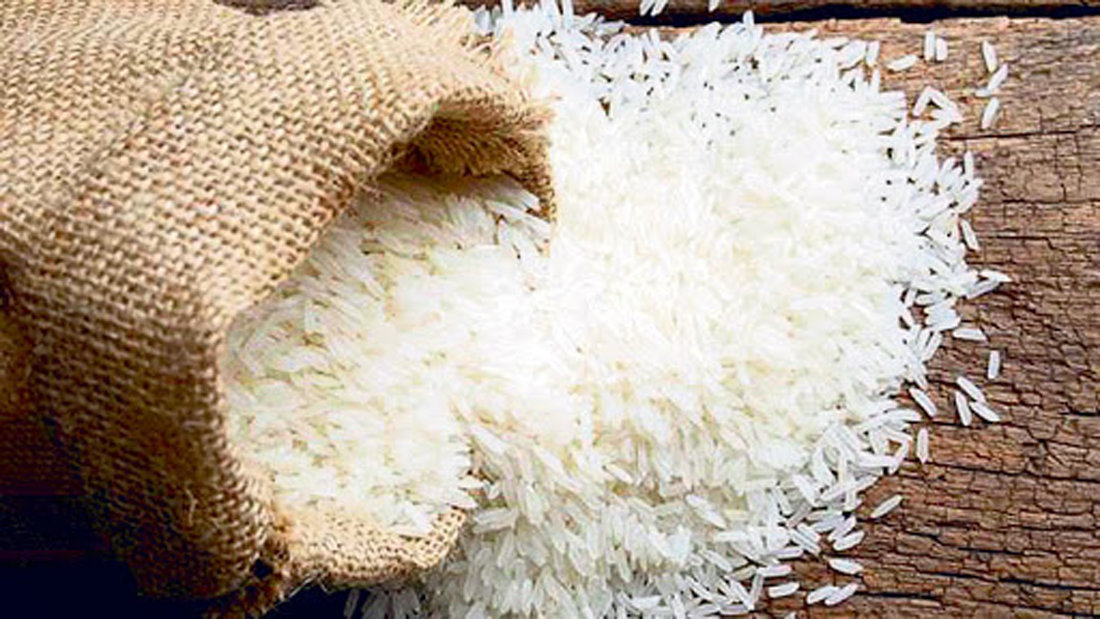
The Nepalgunj main branch of the state owned Food Management and Trading Company has begun selling rice at subsidised rates for the Dashain, Tihar and Chhath festival period. Radio Nepal reported on Monday, October 5 that every rice variety offered at the centre carries a discount of Rs 500 per quintal. Since one quintal equals 100 kilograms, that is equivalent to Rs 5 per kilogram. The branch has set a target of selling 100 quintals during the festival programme, giving households in Banke a clearly dated public price option during a busy buying season.
The reported prices vary by type. Coarse rice is listed at Rs 5,600 per quintal, medium Aruwa rice at Rs 5,800 and medium silky rice at Rs 5,900. Fine steam jeera rice and fortified steam jeera rice are both listed at Rs 8,500 per quintal after the discount. These figures are branch prices reported on October 5, not a national promise for every outlet. Buyers comparing the options should pay attention to the variety, package weight and final amount rather than assuming that all rice at the centre has the same price.
Sales reported through Friday show that the programme had already moved a substantial share of its target. The branch recorded 50 kilograms of coarse rice, 4.75 quintals of medium Aruwa, 1.5 quintals of medium silky, 64.5 quintals of fine steam jeera and five quintals of fortified steam jeera. Together, those quantities equal 76.25 quintals. The figures indicate especially strong demand for fine steam jeera rice, but they do not establish current stock on Monday. Availability can change as new customers buy and the branch replenishes or reallocates supplies.
Radio Nepal also links local interest to tighter customs enforcement on rice brought from the nearby Indian market of Rupaidiha. Consumers who might otherwise have purchased across the border are reported to be visiting the Nepalgunj centre instead. That context is relevant in a border city, but the report does not quantify how much informal or formal cross border buying has changed. It confirms only that customs enforcement has tightened and that the subsidised centre is receiving consumers seeking rice below prevailing market rates.
The Nepalgunj operation sits within a wider public distribution effort. Ratopati reported on September 23 that the Food Management and Trading Company had begun a year round subsidy store programme across 193 outlets and sales centres in 44 districts. That report also described a Rs 5 per kilogram or litre discount on rice, pulses and oil sold under the Nepal Food brand. The company’s official Nepalgunj branch page confirms the branch and its rice catalogue, while an official company page lists the 2083 operating guideline for subsidised price shops. These sources support the broader programme context.

For consumers, the discount is most useful when translated into the quantity actually purchased. A household buying a 25 kilogram bag would save Rs 125 at a rate of Rs 5 per kilogram, while a 50 kilogram purchase would save Rs 250. Those calculations follow directly from the published discount, but actual package sizes and product availability need to be checked at the centre. The listed per quintal prices translate to Rs 56, Rs 58, Rs 59 and Rs 85 per kilogram for the respective varieties before any packaging or sales conditions that the branch may apply.
The programme offers a practical cost reference during a festival season when staple food demand increases, yet it should not be described as unlimited supply. The branch target is 100 quintals, and the Friday sales totals suggest that much of that volume had already been sold. The source does not publish a closing date, daily purchase cap or guarantee that every variety will remain available. Consumers should therefore confirm current stock and any identity or quantity requirements directly with the branch. The material development is the verified discount, the published price list and the measurable progress toward the local sales target.
Source publication date: 2026-10-05. Event or reporting period: Dashain, Tihar and Chhath festival period in 2026.
Sources:Radio Nepal · Food Management and Trading Company Nepalgunj branch · Food Management and Trading Company operating guideline · Ratopati
Source: GPT News Feed