Business
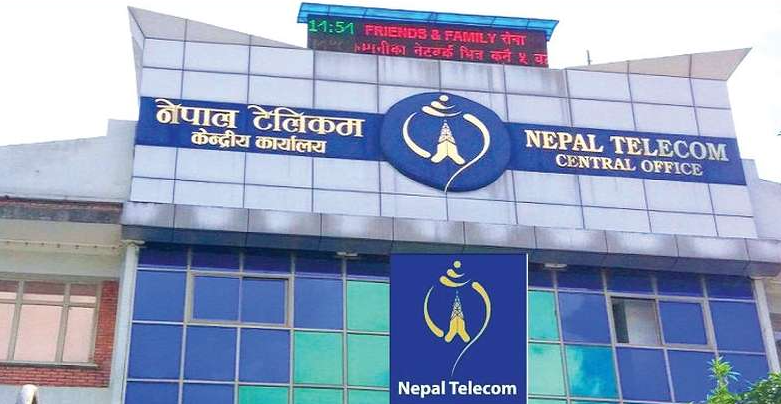
Nepal Telecom says the number of new fibre connections doubled to about 6,000 between mid-September and mid-October as households looked for alternatives to higher private-sector internet prices. The Kathmandu Post published the update on October 28, citing assistant spokesperson Prakshet Thapa Chhetri.
The company had averaged roughly 3,000 new connections per month during the preceding two months, while requests for installations were reported to have risen as much as threefold from earlier levels. Demand was especially strong in densely populated urban areas, including Kathmandu. The immediate attraction is Nepal Telecom’s annual 30 Mbps NT Fibre offer at Rs 4,999, introduced in mid-October with the installation fee waived.
The figures describe new connections during a defined reporting period; they do not establish that every request has already been installed or that the same demand exists in every district.
The rise follows a wider change in Nepal’s fixed-broadband market. Private internet service providers announced that packages below 50 Mbps would no longer be sold or renewed, while some customers reported higher bills for replacement plans.
A Kathmandu Post report from October 6 said lower-speed packages had previously cost roughly Rs 550 to Rs 997 before tax in some cases, while the new minimum-speed options generally moved monthly costs toward Rs 1,100 to Rs 1,200 before tax.
The Nepal Telecommunications Authority argued that providers needed approval before withdrawing or changing packages, while industry representatives pointed to higher equipment, fibre and foreign-currency costs. The authority’s market report cited in that coverage counted 3.56 million fixed-broadband subscriptions nationwide, including 402,132 with Nepal Telecom.
Against that background, the additional 6,000 connections are meaningful for competition and affordability, but they remain a small share of the national subscriber base.
Affordability is only one part of the current story. Customers quoted in the October 28 report raised concerns about long support queues, installation delays and the equipment supplied with the lowest-priced package. One prospective user was told he was 161st in a telephone queue during Dashain.

Another customer alleged that some 30 Mbps subscribers received older single-band routers rather than new dual-band equipment; the report did not independently verify that claim. Nepal Telecom said it was not compromising service standards and had enough network capacity to handle the increase. It expanded its 198 hotline and launched an online portal for connection requests and complaints.
Those measures acknowledge the operational pressure created by rising interest, but their effectiveness should be judged through actual installation times, fault resolution and service performance rather than demand figures alone.
The published tariff details also need careful reading before households compare offers. Nepal Telecom’s official FTTH page lists different prices, equipment and daily mobile-data conditions across internet-only, telephone and Wi-Fi 6 combinations. Higher-speed annual plans include mobile allowances split between all-time data and a bonus usable from 11 pm to 6 am, so the combined figure is not available throughout the day.
The Rs 4,999 headline should therefore not be assumed to include every feature attached to a 100 Mbps, 150 Mbps or 200 Mbps bundle. Analysis: the doubling of new connections shows that price changes can move customers toward a lower-cost public provider, but sustained competition depends on transparent tariffs, suitable routers, reliable local capacity and responsive support.
Consumers should confirm fibre availability, equipment, taxes, fair-usage rules and installation terms for their address through official channels. The verified October 28 development is a sharp increase in connections and enquiries, balanced by service concerns that Nepal Telecom says it is working to manage.
Source publication date: 2026-10-16; material demand update published 2026-10-28. Event or reporting period: Mid-September to mid-October 2026; demand update reported 2026-10-28.
Sources:The Kathmandu Post, Sajana Baral, October 28, 2026; doubled new connections, demand, support concerns and company response · The Kathmandu Post, October 6, 2026; private ISP package withdrawals, price context, regulation and fixed-broadband market figures · Nepal News, RSS annual fibre package report, October 16, 2026 · Radio Nepal, RSS package prices and connection waiver, October 16, 2026 · OnlineKhabar, RSS report, October 16, 2026, 13:24 NPT · Nepal Telecom official FTTH tariff, Wi-Fi 6 festive prices and timed mobile allowances, checked October 16, 2026 · Nepal News, separate earlier mobile and fibre festival announcement, October 12, 2026 · Nepal Telecom official clarification dated Asoj 31, 2083 BS, October 17, 2026 · Nepal Telecom official Wi-Fi 6 announcement dated October 15, 2026 · Nepal News, clarification report October 18, 2026; launch date checked against official statement
Source: GPT News Feed