Business
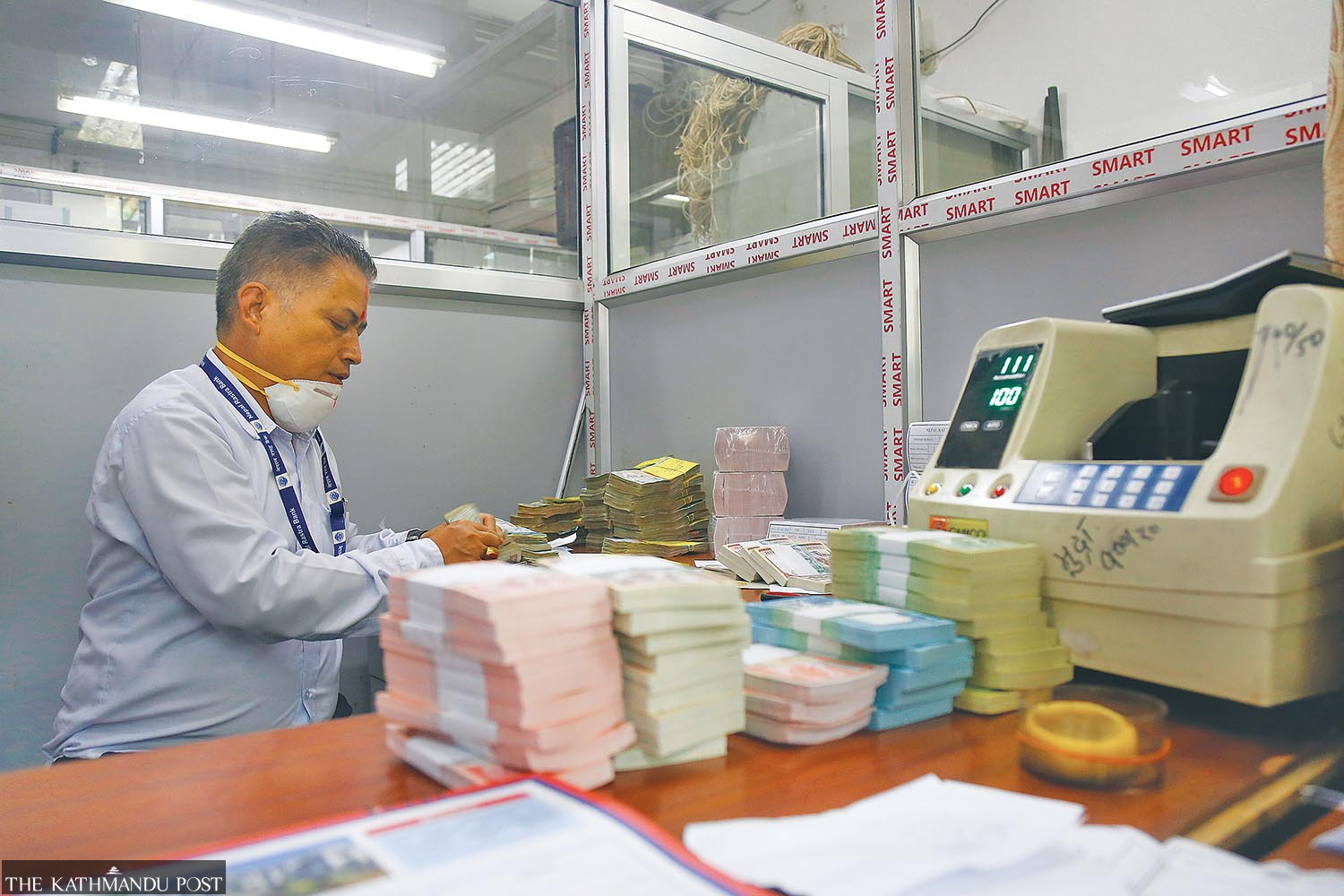
Nepal’s banks and financial institutions extended an additional Rs 133 billion in credit between July 17 and October 11, according to an October 16 Kathmandu Post report citing Nepal Rastra Bank data. That compares with Rs 30 billion in the corresponding period a year earlier. The increase is substantial, but the report cautions against treating it as proof of a broad recovery. Bankers point to import financing, festival demand and higher costs as important influences on the amount borrowed.
The same report places deposits at Rs 8.51 trillion and outstanding credit at Rs 6.07 trillion as of October 11, with an estimated Rs 1.56 trillion in surplus loanable funds. Those are system wide stocks at a stated date, while Rs 133 billion describes additional lending over a period. They answer different questions. Larger new borrowing can coexist with unused lending capacity when deposits are also accumulating. These figures do not establish that every bank has the same position or that every applicant can obtain a loan.
A separate monthly account helps put the new quarterly reporting in sequence. NewsPolar’s October 15 summary of the central bank’s two month report says deposits had risen 0.9 percent to Rs 8,349.72 billion by mid September, while private sector credit grew 1.6 percent to Rs 5,950.58 billion. It also reports a weighted average commercial bank lending rate of 6.38 percent, down from 7.66 percent a year earlier. The average deposit rate was 3.11 percent, compared with 3.96 percent. These are earlier monthly observations, not October 11 balances or offers available to an individual borrower.
That monthly report also recorded Rs 436.36 billion in remittances during the first two months of 2026/27, up 23.9 percent in rupee terms. The external inflows provide context for the availability of funds in the financial system, but should not be equated directly with new domestic investment. Nor should the monthly deposit and credit totals be combined mechanically with the later quarterly figures without matching their coverage and reference dates.
The World Bank’s October 6 Nepal Development Update had already described the link between strong remittances, foreign exchange purchases and banking deposit growth during the preceding fiscal year. It said credit demand remained weak despite lower policy and market interest rates. For FY26, private sector credit rose only marginally as a share of GDP, from 95.7 to 95.9 percent. This is a longer term background assessment, not a competing estimate of the July to October increase reported today.

The Update also noted a deterioration in asset quality: gross nonperforming loans reached 5.7 percent by mid July 2026, while aggregate capital adequacy stood at 12.8 percent, above an 11 percent regulatory minimum. These observations show why the quantity of funds available is not the only banking issue. Credit quality and capital buffers also form part of the picture. The statistics are aggregate indicators from the World Bank’s dated assessment, not an assessment of the safety or condition of a named institution.
The IMF’s explanation of monetary policy provides a useful distinction. Policy rates can influence borrowing costs and spending, but the effects pass through several channels, including bank lending and borrowers’ balance sheets. As analysis, Nepal’s new credit figures therefore need to be read alongside demand, costs and credit quality, not as a standalone verdict on recovery. The October 16 development is stronger reported lending through October 11. Whether it becomes sustained investment and production remains a separate question for subsequent data.
Source publication date: 2026-10-16. Event or reporting period: 2026-07-17 to 2026-10-11.
Sources:The Kathmandu Post, Yagya Banjade, October 16, 2026; updated 07:21 NPT · NewsPolar, October 15, 2026, central bank two month economic report summary · World Bank, Nepal Development Update, updated October 6, 2026 · IMF Finance and Development, Koshy Mathai, Monetary Policy: Stabilizing Prices and Output, June 15, 2021
Source: GPT News Feed