News
Koshi Province has brought a multilingual government law into effect on Wednesday, November 11, expanding the languages recognised for official provincial business beyond Nepali. The Kathmandu Post reported that 13 additional languages are now recognised, bringing the total to 14. They are Maithili, Limbu, Tharu, Tamang, Magar, Bantawa, Urdu, Rajbanshi, Rai languages, Nepal Bhasa, Chamling, Sherpa and Santhali.
The report was published on November 11 and updated at 12:24 pm Nepal time. Nepal News separately reported the implementation on the same date. Neither outlet published an exact time for the announcement or the start of the implementation event.
The official Koshi Province gazette provides the legal basis and date distinction. The Act on the Language of Official Business in Koshi Province, 2083 was authenticated on Kartik 11, corresponding to October 28, 2026, and states that it begins on Kartik 25, corresponding to November 11. The act cites Article 7(2) of Nepal’s Constitution as the basis for a province to determine additional official languages. The Kathmandu Post reported that the Language Commission had recommended Maithili and Limbu for Koshi and that the provincial law went further by adding 11 more languages to reflect the province’s linguistic composition.
The law applies to provincial ministries, commissions, directorates, offices, organised institutions and other agencies under the Koshi government. Its provisions are broader than a ceremonial recognition. Provincial offices are required to make arrangements for translation or use of the official languages.
The government may submit translated copies of bills to the Province Assembly and may publish the provincial gazette in official languages in addition to Nepali. When a service user submits an application and supporting documents in an official language, an office may return the necessary documents translated into that language after completing the work.
Other sections address practical implementation. The act allows public documents to be translated for archiving or publication, prohibits discrimination or humiliating treatment based on the use of another mother tongue in an office, and requires programmes and budget arrangements for language protection and promotion.
It provides for a registered-translator system and an expert group of up to 19 members, with at least one-third women, to advise on research, standardisation, grammar, dictionaries and technical terminology. It also allows offices to display citizen charters, information boards and office names in the relevant scripts. The law permits a review of language use and service effectiveness every five years.

The provincial government also announced that November 11 will be observed annually as Province Language Day. Nepal News reported that the declaration was made on the 141st birth anniversary of Mahaguru Phalgunanda Lingden. The timing connects the administrative change with a day that already carries cultural importance for many communities in eastern Nepal. The language provisions, however, should be understood as a public-service policy rather than a general public holiday announcement. No new nationwide holiday was announced in the reports or the official act reviewed for this article.
For residents, the immediate significance is the formal legal route for more people to interact with provincial institutions through languages used in their communities. The act also recognises distinct writing systems, including Devanagari, Mithilakshar, Sirijanga, Tamayig, Akkha, Kirat, Arabic, Ranjana, Sambhota and Ol Chiki for the relevant languages. That recognition can support visibility and preservation, but the practical effect will depend on trained translators, standardised terminology, staff capacity, translated forms and consistent availability across offices.
As analysis, legal recognition is the beginning of implementation rather than proof that every provincial service is already available equally in all 14 languages. The act gives the government authority to make rules, procedures, directives and standards, and several operational provisions depend on those arrangements.
The most useful follow-up measures will be the number of offices offering multilingual service, the availability of translators and forms, the budget assigned, and whether residents can complete routine procedures without added delay. For now, the verified development is substantial: Koshi has moved a 13-language expansion from legislation into effect and has tied the policy to an annual day recognising the province’s linguistic diversity.
Source publication date: 2026-11-11; The Kathmandu Post updated its report at 12:24 pm NPT and Nepal News published its report the same day. Event or reporting period: The Koshi Province official-language law took effect on 2026-11-11; the provincial gazette records authentication on 2083/07/11, corresponding to 2026-10-28.
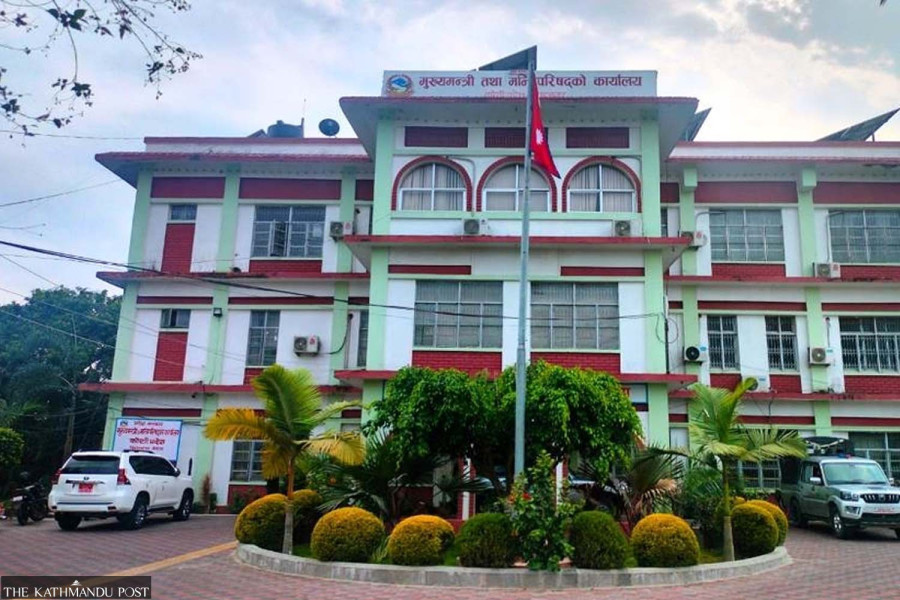
Sources:The Kathmandu Post, published November 11, 2026 and updated at 12:24 pm NPT; implementation, complete language list, Language Commission context and original featured photograph · Nepal News, published November 11, 2026; independent confirmation of implementation and annual Province Language Day declaration · Official Koshi Province Gazette, Act No. 6 of 2083; authenticated Kartik 11 and effective Kartik 25 with service, translation and implementation provisions
Source: GPT News Feed