Business
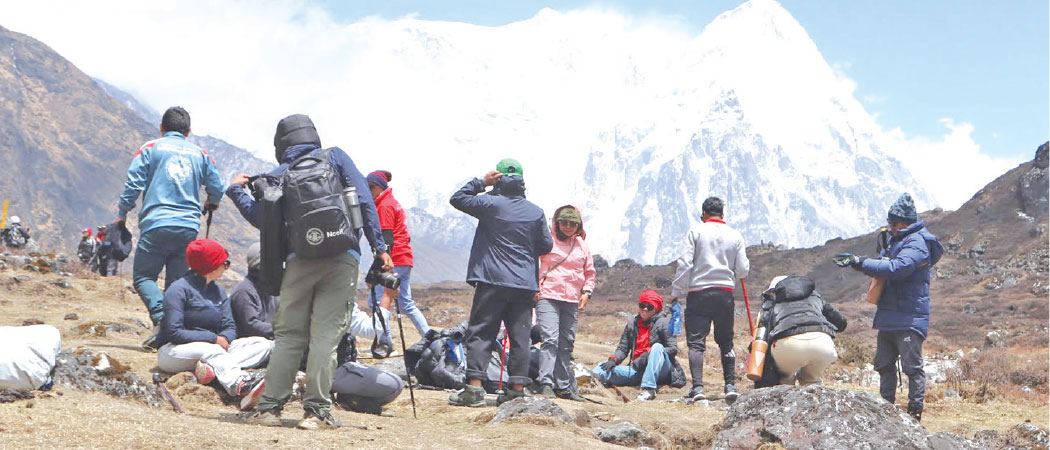
Tourist movement is increasing in the Kanchenjunga region of Taplejung during Nepal’s autumn trekking season. The Rising Nepal reported on Wednesday, October 14 that about 170 foreign visitors had entered the region by Monday, October 12, citing Tashi Tenzing Sherpa of the Ghunsa Tourism Checkpost under the Kanchenjunga Conservation Area Management Council. Some had already reached the base camp areas while others were resting around Ghunsa. Local operators said activity was stronger than during the comparable period last year.
The figure covers recorded foreign visitors, not the total number of people travelling in the region. Local tourism businesses estimated that domestic visitors were roughly twice as numerous, but the report explicitly noted that domestic arrivals are not maintained in a separate systematic record. That distinction matters when describing the season: 170 is a checkpost count for foreign trekkers through Monday, while the estimate for Nepali visitors is an observation from local operators rather than an audited total.
Kanchenjunga has two main trekking seasons. The spring period normally runs from March to May, and the autumn window extends from September to December. A separate Khabarhub report said 950 foreign tourists visited during the first trekking season of 2026. The October count therefore represents the early part of a new seasonal cycle rather than a full year total. Visitors reported this autumn include travellers from France, Australia, Germany and the United States, alongside a larger flow of Nepali families during Dashain and Tihar.
The immediate commercial effect is visible along the trekking corridor. Hotels, lodges, restaurants, guides, porters, transport providers and sellers of local products are receiving more demand. Operators in Ghunsa said accommodation can fill during the festival period. Foreign trekkers also tend to stay longer and use guide and porter services, which spreads visitor spending beyond a single overnight stop. Those reports indicate busier trade, but they do not provide a revenue total or guarantee that every operator is experiencing the same increase.
The region offers access to the northern and southern sides of Kanchenjunga, with Pangpema and Oktang among the best known high altitude destinations. Reaching them requires multi day travel through remote settlements and conservation landscapes rather than a short road visit. The attraction is therefore closely connected to trail conditions, local accommodation, guide availability and the ability to respond when weather or altitude creates difficulty. Visitors should treat the growing numbers as a sign of seasonal activity, not as proof that every route is easy or continuously open.

Weather remains a practical constraint. Local operators said heavy rain in June and July can damage or block trekking routes, while winter snowfall makes travel difficult from December to February. The October report identifies better trails, clearer signs, safer accommodation, first aid points and emergency rescue capacity as continuing needs. It also links sustainable tourism to conservation and community participation. These are development priorities named in the source, not completed improvements, so travellers should still check current route and weather information before departure.
For Taplejung’s tourism economy, the fresh development is a stronger start to the autumn season and the additional work that visitors create for locally owned services. The useful business signal is broader than the 170 recorded foreign arrivals because domestic travel is also active, although not yet measured in the same way. Continued growth will depend on safety, reliable records, conservation and local capacity. The report supports cautious optimism about the season, but final visitor totals and the full economic impact will only be clear after the September to December window closes.
Source publication date: 2026-10-14. Event or reporting period: 2026-10-12.
Sources:The Rising Nepal · Khabarhub
Source: GPT News Feed