News
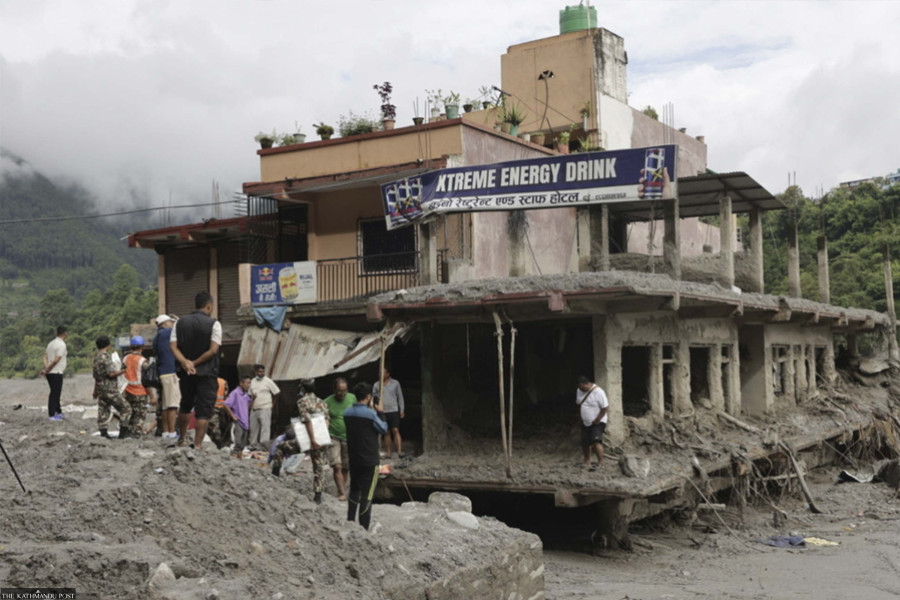
The Board of the Fund for Responding to Loss and Damage has set aside $20 million for Nepal’s recovery from the August 26 floods in the Bhotekoshi-Trishuli corridor, creating a dedicated path for relief, rehabilitation and reconstruction support. The decision was reached during the Fund’s first extraordinary Board meeting on October 22.
The Fund’s official meeting page states that the virtual session began at 12:00 UTC, or 5:45 pm Nepal time; no exact time for the vote was published. The Kathmandu Post and Nepal News reported the decision later on October 22, describing the amount as approximately Rs3 billion. Nepal’s agriculture, forests and environment minister and finance minister had written to the Fund on August 31 to request emergency assistance.
The development is significant because it moves that request from advocacy into an approved country allocation. It should not, however, be described as money already deposited in Nepal’s accounts or as a completed reconstruction programme.
Climate Home News reported that Board members unanimously invited Nepal to prepare a proposal explaining how the allocation would be used, with that proposal still requiring consideration through the Fund’s procedures.
The distinction between allocation and disbursement matters for communities waiting for practical assistance. Nepal News says the next step is a detailed project proposal tailored to flood-affected people in the Bhote Koshi corridor; implementation would begin only after formal approval under the Fund’s operating process.
Climate Home News reports that the Board’s package also contains $1.6 million for administrative costs and that the proposal is expected to return to a future Board meeting. No final disbursement date, implementing agency, location-by-location budget or household payment schedule was announced with Thursday’s decision. The scale of need is much larger than the allocation.
Nepal News cites government estimates of about $2.7 billion in direct economic damage and roughly $4.7 billion in longer-term reconstruction costs, while more than 60,000 people in about 15,000 households were directly affected. Those figures give context to the $20 million without implying that the Fund is intended to cover every loss.

The World Bank’s October 6 Nepal Development Update separately projected national growth slowing to 3.7 percent in the 2027 fiscal year after disruption to industry and services from the flood, and called for reconstruction that incorporates updated risk assessments, stronger redundancy in transport, energy and communications, and improved early-warning systems.
This emergency allocation is also separate from an earlier $20 million award linked to Nepal’s proposals under the Fund’s Barbados Implementation Modalities. The Kathmandu Post reported on September 9 that the earlier award arose from applications submitted before the August flood and still required work on review comments involving the Alternative Energy Promotion Centre.
Thursday’s decision concerns the government’s later request for the Bhotekoshi-Trishuli disaster. Treating the two announcements as the same grant would obscure what has changed. Analysis: the new decision gives Nepal a reserved financing envelope and a formal route to present a recovery plan, but its impact will depend on the quality, speed and transparency of the proposal and subsequent approval.
The Board described the mechanism as exceptional, and Climate Home News reported debate over whether it should create a precedent for rapid responses to future disasters. For readers in Nepal, the practical questions now are which recovery measures the government proposes, how affected communities participate, what safeguards and reporting apply, and when the Fund approves and releases money.
Until those details are published, the most accurate summary is that $20 million has been set aside for a Nepal-specific flood response, not that the full amount has already reached projects or households. Future updates should be checked against official Fund documents and Nepal government announcements rather than estimates circulating without a confirmed implementation plan.
Source publication date: 2026-10-22. Event or reporting period: 2026-10-22.
Sources:The Kathmandu Post, Anil Giri, October 22, 2026, updated 9:31 pm NPT; Nepal allocation, government request and original featured photograph · Nepal News, October 22, 2026; grant purpose, proposal requirement and government damage estimates · FRLD, October 22, 2026; official first extraordinary Board meeting date, format and start time · Climate Home News, October 22, 2026; unanimous Board decision, proposal step, administrative costs and process context · The Kathmandu Post, September 9, 2026; distinction from Nepal’s earlier Barbados Implementation Modalities award · World Bank, October 6, 2026; Nepal growth and resilient reconstruction context
Source: GPT News Feed