News
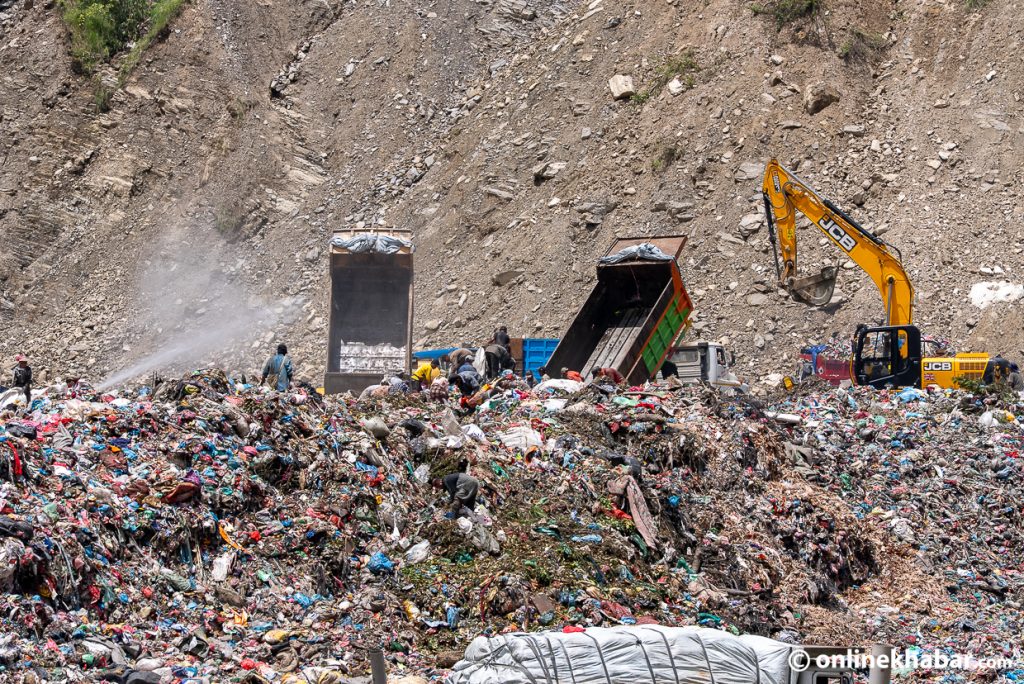
Kathmandu Metropolitan City has announced that waste management at Bancharedanda will be affected from October 18 through October 21 during Dashain, according to an Onlinekhabar report published on October 16. The four day interruption concerns the Kathmandu Valley’s final disposal site and comes as sanitation workers take time off for the festival. The dates are now close enough for households, offices and businesses to prepare before the disruption begins. This is a temporary service notice, not a permanent closure of the landfill.
Sarita Rai, chief of the city’s Environment Management Department, asked residents to keep biodegradable and nonbiodegradable waste separate and retain it within their homes or compounds during the affected period. The report says waste should not be left indiscriminately on roads or in public spaces. It also says regular waste management will continue on other days. It does not provide an individual collection timetable for every ward or establish that every contractor will make an extra collection before the holiday.
Bancharedanda serves a wider area than Kathmandu city alone. In a March 20 report, The Kathmandu Post described household waste arriving from all 18 local units of the Valley, as well as some local units in Kavrepalanchok. That shared dependence helps explain why a notice about final disposal matters beyond the immediate neighbourhood of the landfill. It also distinguishes final disposal from the separate stages of household collection, temporary transfer, sorting and the recovery of reusable materials.
The March report described Kathmandu’s work on segregated collection and transfer infrastructure. It said separated household waste had been collected in ten wards since 2024, with some trucks fitted with compartments to keep materials apart. Biodegradable material was being composted at Teku, with compost used in city gardens and parks or distributed to residents. Reusable nondegradable material was also being sold. These are dated examples of the city’s waste management approach, not confirmation that every ward now has the same collection arrangement or treatment capacity.
The United Nations Environment Programme’s background guidance explains why sorting and reducing waste are connected. It recommends separating food waste at source and supporting composting, alongside action to avoid generating unnecessary waste in the first place. For consumers, its examples include buying the amount of food needed, storing it carefully and using leftovers. These are general waste prevention principles. They do not turn the Kathmandu notice into a new compost collection service or mean every household has the space and equipment for composting.

UNEP also treats waste as a collection of different material streams rather than one interchangeable mass. Its guidance covers textiles, electronics, plastics and hazardous materials as well as food. It notes that chemicals and hazardous waste require specialised treatment and disposal. That wider perspective supports keeping material types identifiable, but no new Kathmandu collection point for electronics or hazardous waste is announced in the October 16 report. Residents should not infer an unannounced disposal option from general international guidance.
As analysis, the immediate value of the notice is its combination of a defined period and a clear request to avoid transferring household waste into shared public spaces. Separation before storage can preserve the distinction between materials when collection resumes. Waste reduction can also limit how much accumulates during the break. The confirmed local action remains the October 18 to 21 disruption and the city’s request for separate storage on private premises; any later change to those dates or local collection arrangements would need a fresh notice.
Source publication date: 2026-10-16. Event or reporting period: 2026-10-18 to 2026-10-21.
Sources:Onlinekhabar, October 16, 2026 at 08:26 NPT, KMC holiday disposal notice · The Kathmandu Post, March 20, 2026 at 11:07 NPT, waste collection and segregation background · UNEP, Eight ways to overcome the waste pollution crisis, background guidance checked October 16, 2026; no publication date displayed
Source: GPT News Feed