Business
A fresh Nepal News feature published on October 15 documents how women in Jumla are combining improved farming, clean energy and market connections with greater economic independence. Published for the International Day of Rural Women, Bidhya Rai’s report describes changes developed over several years rather than a programme launched today. Its examples include orchard management, electric agricultural equipment and small enterprises. The common development is the connection between productive tools, income and women’s ability to take part in household and community decisions.
The report profiles Channarupa Budha of Lamri in Patarasi Rural Municipality Ward 4, who chairs the Rani Farmers’ Group. Its 31 members include 26 women and five men. She has received training and technical support through the Renewable Energy for Resilient Agri Food Systems project, known as RERAS. Another participant, Pabitra Koirala Neupane of Tatopani Ward 6, describes earnings from apples and local crops going into her own bank account. These are individual experiences, not a measured income result for every woman in Jumla.
UNDP’s current project description provides the wider institutional context. RERAS combines access to energy with agriculture, including irrigation and machinery used after harvest for processing, storage, packaging and marketing. Its project period runs from July 2023 to June 2027, with selected municipalities across ten districts in four provinces. Funding partners listed by UNDP include Norway, Finland and UNDP itself. The project works with local governments and specialist partners, rather than treating an electricity connection alone as a complete agricultural development intervention.
UNDP reports that the programme has reached 12,664 people, with women accounting for 71 percent. Its page says 13 rehabilitated micro hydropower plants supply an additional 499 kilowatts to 5,537 households, while eight lift irrigation schemes serve 79.1 hectares. These are programme wide figures, not totals for the Rani Farmers’ Group or a new October 15 allocation. The same project description emphasises reducing women’s workload and improving their participation in decisions, alongside access to equipment and finance.
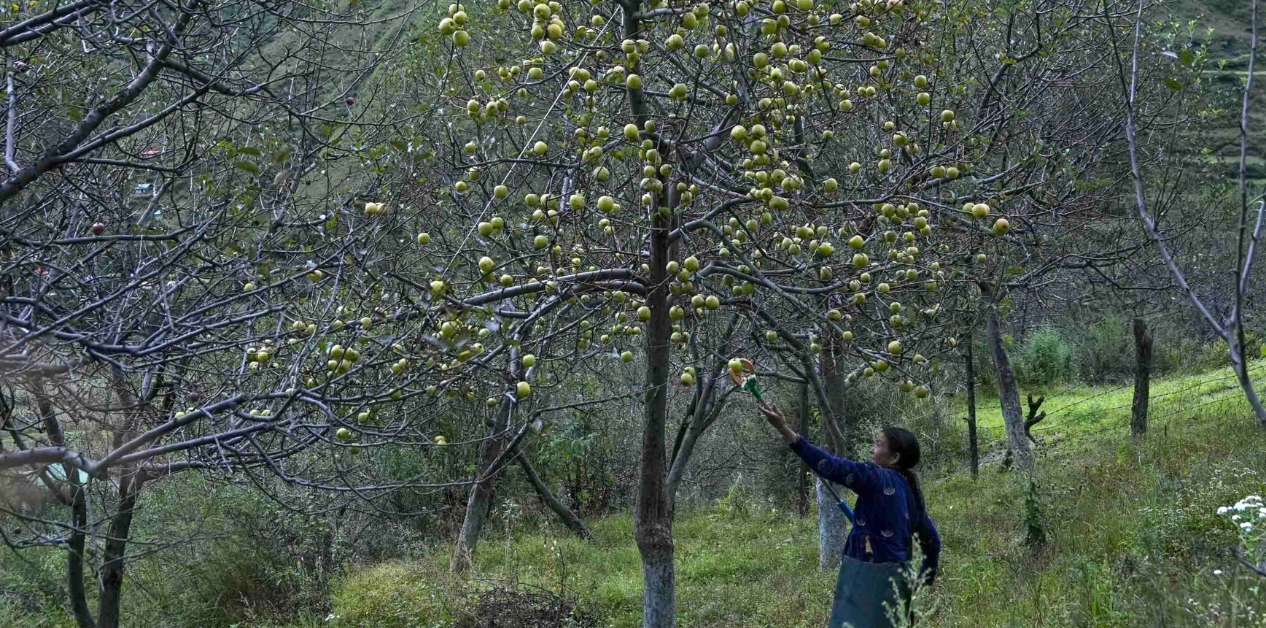
Earlier field reporting shows how those objectives have been pursued locally. In an August 7 UNDP account based on an August 2025 visit, gender equality analyst Surya Bajracharya described women farmers in Tatopani and Patarasi preserving indigenous crops while adopting new technology. Examples included apple orchard training, solar lift irrigation and digital information for managing water and cultivation. The account connects new tools with existing knowledge of Jumla’s crops rather than presenting traditional farming experience as something technology simply replaces.

A separate UNDP report dated February 9 describes changes in community energy services, including digital billing and payment systems at rehabilitated micro hydropower plants. It discusses trained women taking technical roles as meter readers and helping households use payment tools. That is earlier programme context, not a fresh employment announcement today. It illustrates that the relationship between energy and rural livelihoods includes maintaining services and collecting revenue as well as powering equipment in a field, mill or small workshop.
As analysis, the October feature is most useful when these different scales remain clear: personal testimony describes specific lives, project monitoring describes a broader intervention, and earlier field accounts explain how support has developed. None alone proves that every household has the same income, workload or decision making power. Together they offer a grounded account of rural enterprise in Nepal, with women recognised as farmers, technical workers and community leaders. The timely focus is their work and agency, without implying endorsement of an unrelated business.
Source publication date: 2026-10-15. Event or reporting period: 2026-10-15.
Sources:Nepal News, Bidhya Rai, October 15, 2026 feature · UNDP Nepal, RERAS project scope, period and reported achievements · UNDP Nepal, Surya Bajracharya field account, August 7, 2026 · UNDP Nepal, women and community energy services, February 9, 2026 · United Nations, International Day of Rural Women observance
Source: GPT News Feed