Business
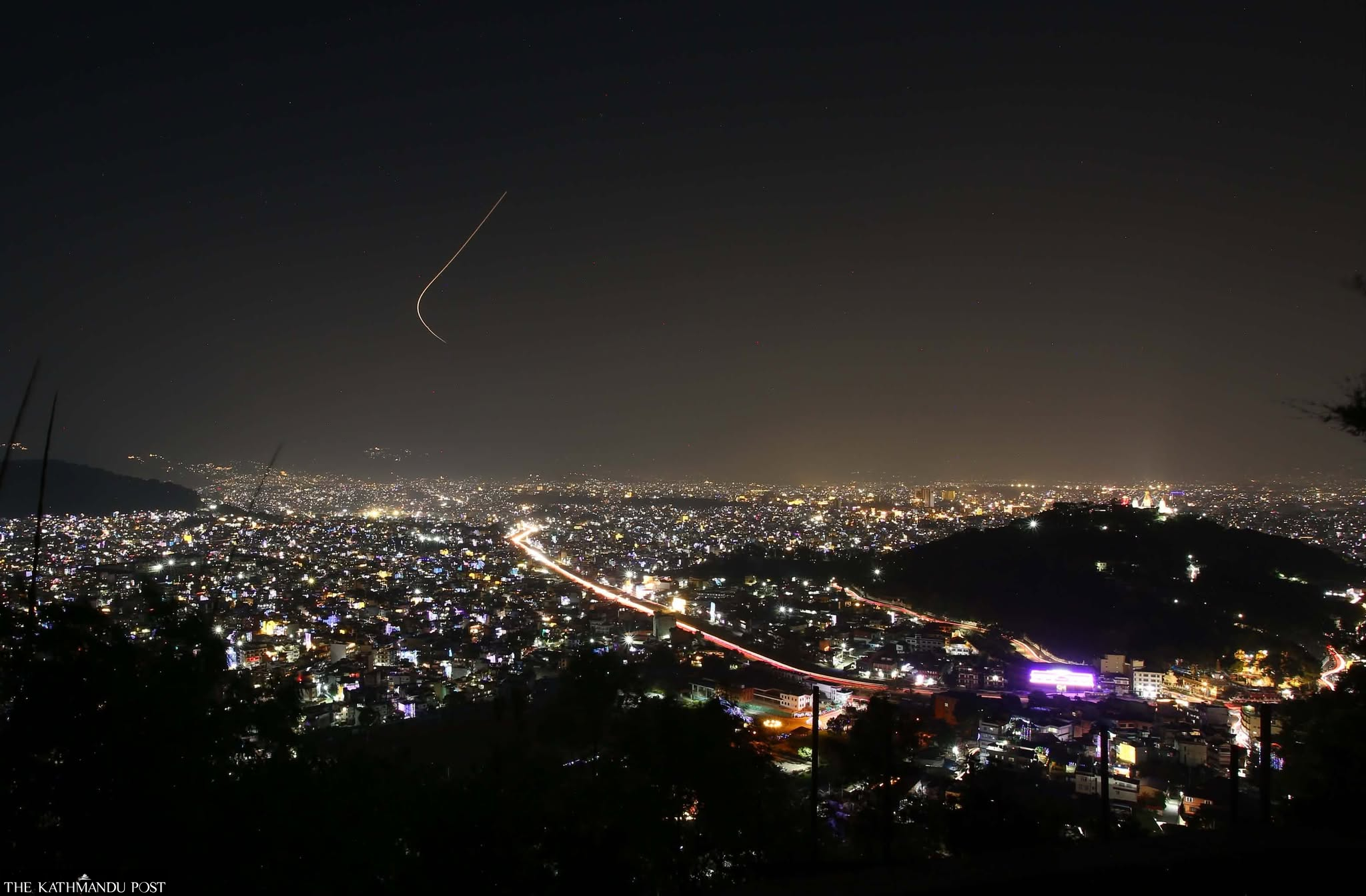
Nepal’s domestic electricity demand reached a peak of 1,813 megawatts at 6:15 pm Nepal time on Sunday, November 8, as households and communities illuminated homes for Laxmi Puja. The Kathmandu Post published the completed result on November 8 and updated it at 8:49 pm NPT, after an earlier forecast had placed the likely peak at around 1,700MW. The final reading was therefore 113MW above that estimate. Data attributed to the Nepal Electricity Authority’s Load Dispatch Centre show that supply remained operational nationwide during the peak period, with no recorded interruption or system tripping.
The national system handled 2,400.30MW at the peak. Domestic consumption accounted for 1,813MW, while 587.30MW of surplus power was exported to the Indian market, according to The Kathmandu Post’s report. Ratopati’s English report, attributed to the national news agency RSS and the authority, independently gives the same domestic demand, total system and export figures. The figures describe power at the evening peak, measured in megawatts; they should not be read as the total electrical energy consumed throughout the entire day, which would be measured over time in megawatt-hours.
Kathmandu Valley demand reached 489.50MW during the same period. The authority’s reported generation mix comprised 1,536.50MW from independent power producers, 499.20MW from NEA subsidiary companies, 342.30MW from the authority’s run-of-river and semi-storage plants, and 22.30MW from reservoir projects. Those components total 2,400.30MW, matching the system figure reported for the peak. The supply mix allowed the country to cover the festival surge without importing power at that moment while continuing cross-border sales.
The latest number also extends a multi-year rise in Laxmi Puja demand. The authority’s figures carried by Ratopati and the specialist outlet Urja Khabar place the national peak at 1,745MW in 2025 and 1,602.2MW in 2024. This year’s reading is 68MW above last year’s level. Kathmandu Valley demand also increased from about 402.49MW in 2025 to 489.50MW this year, a rise of roughly 87MW. These comparisons use the authority’s completed peak readings rather than the preliminary demand estimates published before the evening observance.
Preparations had begun before the peak. The Kathmandu Post’s earlier November 8 report said NEA management and provincial offices had arranged round-the-clock monitoring, kept maintenance teams ready and directed local offices to respond promptly through the No Light service. The authority expected domestic generation to be sufficient even with decorative lighting increasing household use and many industrial facilities reducing operations for the holiday. The final result confirms that the system met a higher-than-forecast household peak without a reported nationwide disruption.

The export figure needs careful interpretation. It does not mean Nepal had 587.30MW available at every hour of the day or that domestic demand was permanently lower than generation. Hydropower output, local consumption and cross-border schedules can all vary by hour. It shows that at the recorded 6:15 pm peak, available supply exceeded domestic demand by that amount and the surplus was directed to the export market. The report is therefore a snapshot of a particularly demanding festival moment, not a forecast for the dry-season balance or a guarantee against local faults on other days.
As analysis, the significance lies in the combination of three verified outcomes: demand exceeded the advance estimate, the system supplied the national peak without a recorded interruption, and exports continued at the same time. That makes the event relevant both as a public-service performance measure and as an indicator of Nepal’s growing electricity market.
The result should still be described precisely: it was an instantaneous Laxmi Puja peak on November 8, not annual consumption data and not evidence that every local connection can never experience a fault. For readers, the clearest takeaway is that Nepal met a 1,813MW festival peak at 6:15 pm NPT while exporting 587.30MW of surplus power during the recorded period.
Source publication date: 2026-11-08; The Kathmandu Post report updated at 8:49 pm NPT. Event or reporting period: 2026-11-08.
Sources:The Kathmandu Post, published November 8, 2026 and updated at 8:49 pm NPT; completed peak, export and uninterrupted-supply figures · Ratopati English / RSS, published November 8, 2026; NEA-attributed peak time, generation mix and historical comparison · The Kathmandu Post advance report, published November 8, 2026 and updated at 6:33 pm NPT; 1,700MW forecast and standby preparations · Urja Khabar, published November 8, 2026; independent energy-sector confirmation and prior-year peak figures
Source: GPT News Feed